
There’s a specific moment when people realize their eyes have betrayed them.
Usually it happens in public.
A restaurant menu arrives. The lighting is terrible. You extend your arm farther and farther away from your face like you’re attempting to receive satellite signals. Eventually someone at the table says, “Need my reading glasses?”
Devastating.
This slow-motion visual mutiny is often presbyopia, the extremely common age-related loss of near focusing ability that eventually affects almost everyone. According to the American Academy of Ophthalmology, presbyopia typically begins around age 40 as the eye’s natural lens becomes less flexible over time.
For decades, reading glasses were the obvious solution.
Now? There’s growing interest in a different approach: prescription ophthalmic solutions designed to sharpen near vision using something called the pinhole effect.
Which sounds suspiciously like science fiction but is actually rooted in basic optics.
The Pinhole Effect Is Weirdly Simple
Imagine squinting at something blurry.
Almost instinctively, your vision sharpens slightly. That’s not your imagination. It’s physics doing its thing.
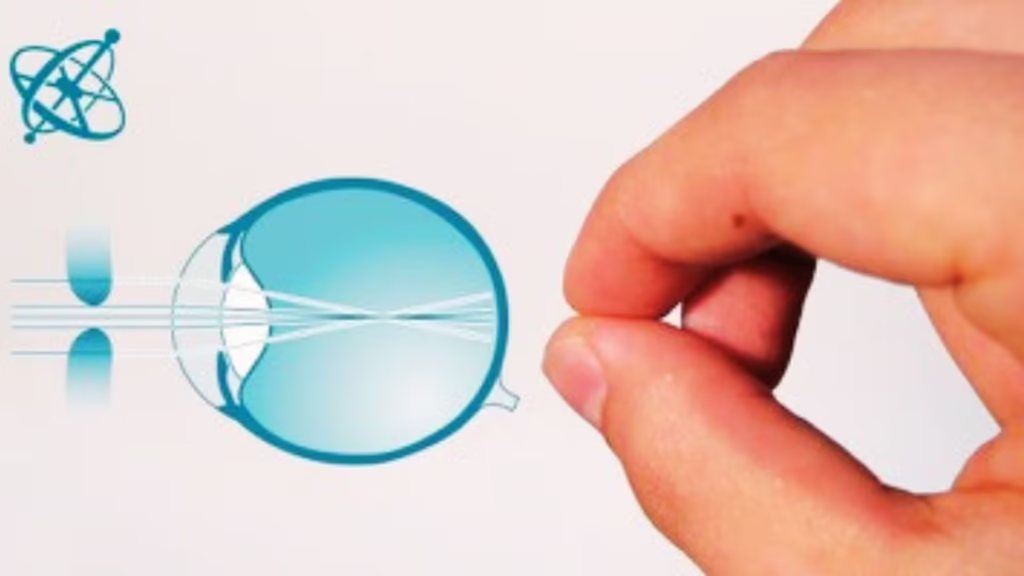
The pinhole effect works by reducing the amount of unfocused light entering the eye. When light rays are narrowed through a smaller opening, whether by squinting or through pharmacological pupil constriction, fewer scattered rays reach the retina. The result is improved depth of focus and sharper near vision.
Tiny adjustment. Big difference.
Camera lenses work similarly. Narrow apertures increase focus depth, which is why photographers obsess over aperture settings while casually using words like “bokeh” in normal conversation.
Human eyes operate on many of the same optical principles.
Why Near Vision Gets Worse With Age
When you’re younger, the lens inside your eye changes shape easily to focus on objects at different distances. Reading a text message? Fine. Looking across the room? Also fine.
Then aging enters the chat.
Over time, the lens gradually stiffens, making it harder for the eye to focus on nearby objects. That’s presbyopia. According to the National Eye Institute, this process is considered a normal part of aging rather than a disease.
Still annoying, though.
The result is blurry close-up vision, especially in low light or after long periods of screen use. Menus become difficult. Ingredient labels start looking like legal disclaimers. Text messages suddenly require ideal lighting conditions and emotional resilience.
How Modern Ophthalmic Solutions Use the Pinhole Effect
This is where modern ophthalmic solution technology enters the picture.
Certain prescription eye drops are designed to temporarily reduce pupil size, creating a controlled pinhole effect that improves near focus for several hours. By limiting peripheral light scatter and increasing depth of field, nearby objects may appear sharper without the need for reading glasses.
In 2021, the U.S. Food and Drug Administration approved the first prescription eye drops specifically for age-related blurry near vision, signaling a major shift in presbyopia management.
And understandably, people became interested very quickly.
Because while reading glasses work perfectly well, many adults are not emotionally prepared for the “there are now readers in every room of my house” chapter of life.
The Appeal Goes Beyond Vanity
It’s easy to assume interest in ophthalmic solutions is purely cosmetic.
It’s not.
A lot of adults simply want flexibility.
Think about how many times people shift focus during a normal day: checking a phone, driving, reading receipts, looking at computer screens, cooking, texting, reviewing documents, responding to emails. Near and distance vision constantly compete for attention.
Traditional readers can become inconvenient during those transitions. Helpful? Absolutely. Annoying? Also yes.
That’s why products like VIZZ are part of a growing conversation around modern approaches to visual support. Many people are looking for options that fit more naturally into fast-moving daily routines without requiring constant glasses management.
And frankly, that’s understandable.
The Science Sounds Advanced. The Goal Is Surprisingly Basic.
Nobody using an ophthalmic solution is trying to become a cyborg.
The goal is much simpler.
People want to read comfortably again.
That’s it.
The technology may involve pharmacology, optics, and pupil dynamics, but emotionally, the motivation is incredibly ordinary. Adults want to send texts without squinting. Read restaurant menus without flashlight assistance. Check emails without hunting for misplaced reading glasses.
Modern ophthalmic solutions simply offer another pathway toward that outcome.
Not Everyone Experiences Presbyopia the Same Way
An important detail often gets overlooked here: vision changes are deeply individual.
Some adults only struggle with near vision occasionally. Others notice it constantly. Lighting conditions, screen time, dry eye symptoms, and overall eye health all influence how severe blurry near vision feels day to day.
That’s why comprehensive eye exams remain essential. Conditions like cataracts, glaucoma, retinal disorders, and dry eye disease can also affect visual clarity. The American Optometric Association recommends regular eye examinations to evaluate overall eye health and determine appropriate treatment options.
Which is the responsible part of this article.
The less glamorous but extremely important part.
Vision Correction Is Becoming More Personalized
For years, near-vision correction felt pretty binary: either wear reading glasses or accept blurry text as your new personality trait.
That’s changing.
Modern ophthalmic solutions built around the pinhole effect represent a broader shift toward flexible, personalized vision management. They don’t eliminate aging. Nothing does, despite what certain wellness influencers keep promising online. But they do offer another option for adults navigating one of the most universal visual changes of middle age.
And honestly, having more than one option feels like progress.
Especially when the alternative is holding your phone three feet away and pretending the font is the problem.