Introduction: Luxury is Changing Direction
For decades, automotive luxury was defined by excess. Bigger engines, louder presence, aggressive styling, and performance figures that demanded attention. Status was something you projected outward—through noise, speed, and visual dominance.
That definition is shifting.
A quieter form of luxury is emerging, particularly among younger buyers in urban markets and EV-first segments. Instead of aggression, the new status symbols prioritise calmness: smooth ride quality, minimal cabin disruption, intuitive technology, and environments that feel intentionally restrained.
This is “soft luxury”—a movement that reframes what it means for a car to feel premium.
From Power to Presence: A Subtle Reversal in Priorities
Traditional luxury vehicles often emphasised mechanical power as a proxy for success. Large displacement engines, sharp throttle response, and assertive road presence were central to their appeal.
But in recent years, particularly with the rise of electrification, the conversation has shifted. Without the noise and vibration of internal combustion engines, manufacturers have had to redefine luxury using entirely different cues.
Soft luxury prioritises:
- Acoustic isolation over engine sound
- Smoothness over acceleration aggression
- Minimalist interiors over complex dashboards
- Emotional calm over performance theatrics
The result is a driving experience that feels less like command and control, and more like controlled detachment from stress.
The Cabin Becomes the Centre of Gravity
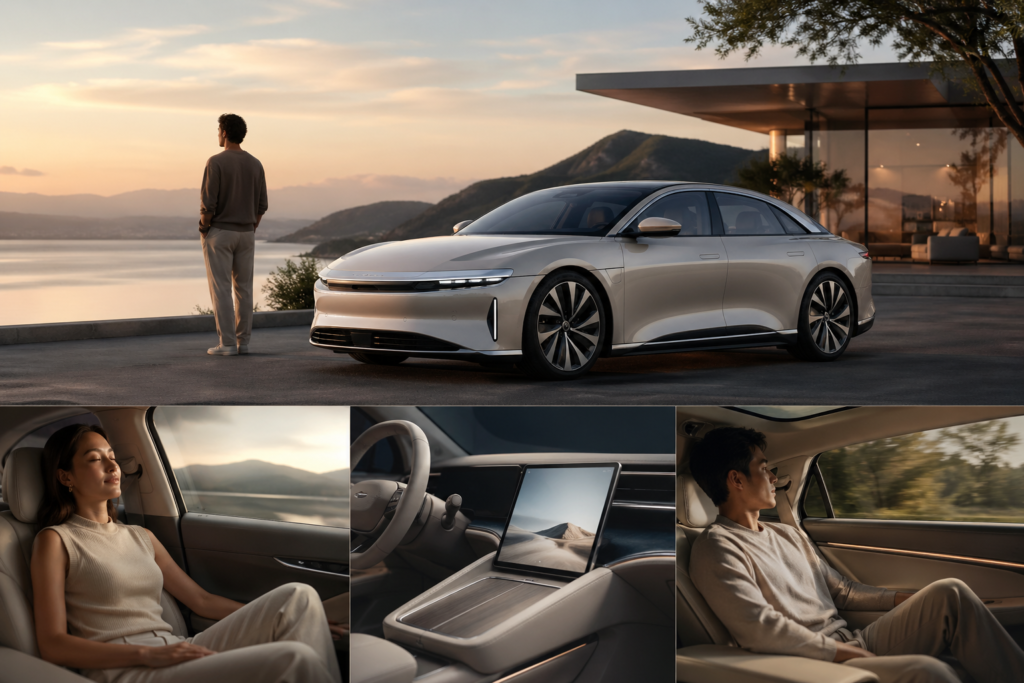
In soft luxury vehicles, the interior is no longer just a functional space—it is the product itself.
Cabins are increasingly designed to feel closer to high-end living spaces than traditional automotive interiors. This includes:
- Neutral, muted colour palettes
- Reduced physical button clutter
- Ambient lighting that adjusts subtly rather than dramatically
- Materials chosen for tactile comfort rather than visual impact
Noise reduction has become a defining metric. Road and wind isolation, once secondary considerations, are now central to how premium a car feels. The goal is not just silence, but a sense of separation from external chaos.
In effect, the car becomes a controlled environment—almost architectural in its intention.
Minimalist Technology and “Invisible” Interfaces
One of the most noticeable shifts in soft luxury design is the retreat of visible technology.
Where older premium cars displayed status through large screens and complex control layouts, newer designs are moving toward simplification. This doesn’t mean less technology—it means less visible technology.
Voice control, haptic feedback, and adaptive systems are replacing physical clutter. The best interfaces are increasingly those that don’t draw attention to themselves at all.
The philosophy is straightforward: technology should respond, not demand.
This creates a driving experience where interaction feels less like operating a machine and more like inhabiting a responsive environment.
The Emotional Side of Driving Calm
Soft luxury is not just a design trend—it reflects a broader cultural shift in how younger drivers relate to cars.
Instead of using vehicles as extensions of status competition, many now view them as spaces of recovery. The car becomes a buffer between digital overload, work pressure, and constant connectivity.
This aligns with wider lifestyle trends around wellness and mental space. Driving is no longer only about movement from point A to B, but about the quality of time spent in between.
As a result, comfort is being redefined. It is no longer simply about seat softness or suspension tuning—it is about emotional neutrality. A good drive feels undisturbed.
Electric Vehicles Accelerating the Shift
Electric vehicles have played a major role in accelerating soft luxury aesthetics.
Without engine noise or vibration, EVs naturally lend themselves to calm interiors. This absence of mechanical feedback forces designers to rethink how emotional engagement is delivered.
Instead of sound and sensation, manufacturers rely on:
- Cabin refinement
- Subtle acceleration curves
- Adaptive suspension systems
- Controlled lighting and interface design
The driving experience becomes less about sensory intensity and more about sensory balance.
This has helped normalise the idea that luxury does not need to announce itself loudly to be effective.
Status is Becoming Less Visible, More Experiential
Perhaps the most interesting shift is how status itself is being redefined.
In earlier eras, luxury was something others could immediately recognise. Today, soft luxury is often deliberately understated. The most premium experiences are those that are felt rather than seen.
This creates a subtle paradox: the quieter the car, the more intentional its luxury becomes.
Younger drivers, in particular, appear less interested in overt signalling and more focused on internal experience. Comfort, calmness, and refinement are becoming markers of taste rather than spectacle.
Even external customisation is evolving in this direction. Personalisation is less about attention-grabbing aesthetics and more about coherence and identity alignment. In this context, services like Number 1 Plates sit within a broader ecosystem of automotive individuality, where details are chosen for personal meaning rather than external validation.
Design Language: The End of Visual Noise
Soft luxury design tends to avoid sharp contrast and aggressive detailing. Instead, it leans into continuity and restraint.
Common design characteristics include:
- Smooth exterior surfacing with fewer hard edges
- Hidden or integrated door handles
- Reduced chrome usage
- Flowing interior architecture
The goal is not to eliminate design identity, but to reduce cognitive load. The car should feel visually calm even before it is driven.
This mirrors wider design trends in architecture and digital products, where simplicity is increasingly associated with sophistication.
Conclusion: Luxury That Doesn’t Need Attention
Soft luxury represents a quiet but meaningful evolution in automotive culture. It reflects a shift away from status as performance or spectacle, toward status as experience and control of the environment.
Rather than projecting dominance, modern luxury cars increasingly offer something more internalised: calm, focus, and relief from external noise.
As automotive design continues to evolve—especially under electrification and digital integration—the definition of premium is likely to become even less about what a car shows to the world, and more about what it removes from the driver’s experience.
In that sense, the most luxurious cars of the future may not be the ones that stand out the most, but the ones that let the outside world fade away entirely.